
Study Links Growing Wealth Inequality to Higher Death Rates
Five Decades of Data Reveal Particularly Strong Association Among Working-Age Women and Deaths Involving Suicide and Drugs
Blog Post

The people most harmed by heart disease are poorly represented in research on promising new treatments. But small financial incentives could help change that, according to LDI Fellows and CHIBE-Affiliated Faculty Alexander C. Fanaroff, Kevin Volpp, Scott Halpern, Rachel Kohn, Alisa Stephens-Shields, and collaborators.
The team from Penn’s Behavioral Economics to Transform Trial Enrollment Representativeness (BETTER) Center, which focuses on behavioral economics, tested ways to increase enrollment of Black and Hispanic patients in clinical trials through the ITERATE study, funded by the American Heart Association (AHA).
Small financial incentives proved to be the most effective of four strategies tested to make research more representative. Providing a $25 incentive nearly doubled participation among underrepresented groups.
These findings matter because clinical trials identify new treatments and should include the people who will use them in the real world.
From October 2023 to November 2024, the researchers invited more than 26,000 patients to enroll in the Penn Medicine BioBank, a collection of biological samples donated by patient volunteers and linked to clinical information for research purposes.
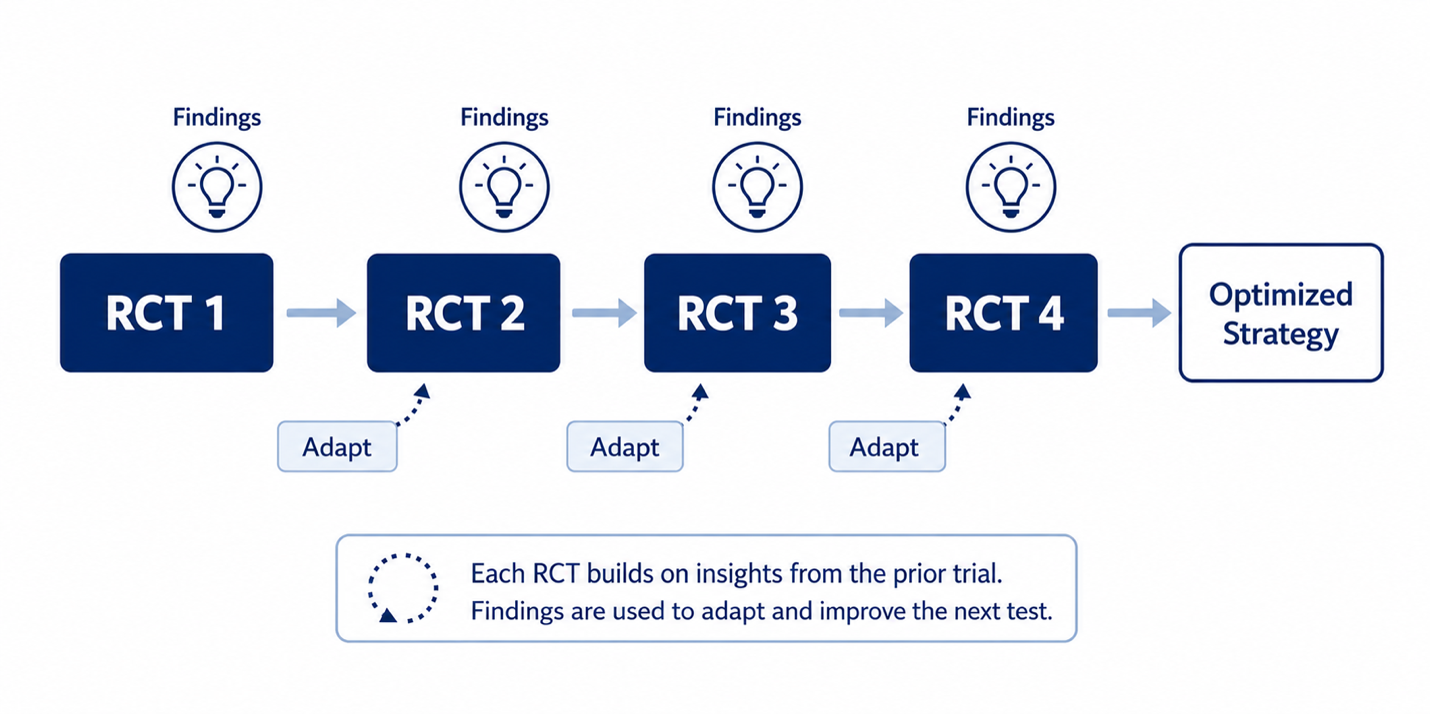
The team randomly assigned patients to receive different outreach messages in a series of four randomized clinical trials (RCTs). The most successful messaging for enrolling patients was then incorporated into the next trial. Figure 1 shows the design.
The financial incentives raised enrollment across the board, including among those with Medicaid insurance, those living in more disadvantaged communities (measured by the area deprivation index), and patients younger than 65. Comparing guaranteed dollar amounts and chances to win money in a lottery revealed that no incentive structure was superior to any other.
More research is occurring at the BETTER Center, led by LDI Senior Fellow Scott Halpern and housed within the PAIR Center. The effort is part of the American Heart Association Science of Diversity in Clinical Trials Strategically Focused Research Network (SFRN), which brings together six centers to improve representation in clinical trials focused on heart health.
A follow-up project, called OSPREY, is underway to determine whether other strategies can improve the representativeness of RCTs.
The study, “Messaging Informed by Behavioral Economics and Representativeness in Clinical Research Enrollment: Four Randomized Clinical Trials,” was published in JAMA Network Open on July 16, 2026. Authors include Alexander C. Fanaroff, Nirali Patel, Casey Whitman, Adina Lieberman, Shira Blady, Colleen Morse Kripke, Nawar Naseer, Joellen Weaver, Modele Ogunniyi, Rachel Kohn, Alanna A. Morris, Alisa Stephens-Shields, Kevin G. Volpp, and Scott D. Halpern.

Five Decades of Data Reveal Particularly Strong Association Among Working-Age Women and Deaths Involving Suicide and Drugs

Doctors Must Explain How Switching From Cigarettes May Lower Health Risks

LDI Fellows’ Study Backs Hospital Addiction Care Model, Although Financial Gains Remain Unproven

Chart of the Day: U.S. Misses Heat Deaths That Occur Outside Work, LDI Fellows Say

New Study Finds Many Local Markets Could Support More Competing Hospitals

Two Health Policy Experts Find Bipartisan Consensus in Site Neutral Payments, Controlling Medicare Costs