
Pregnancy Can Turn Deadly Before Prenatal Care Begins
LDI Fellow and OB-GYN Calls for Faster Testing and Better Early-Pregnancy Care
Substance Use Disorder
News
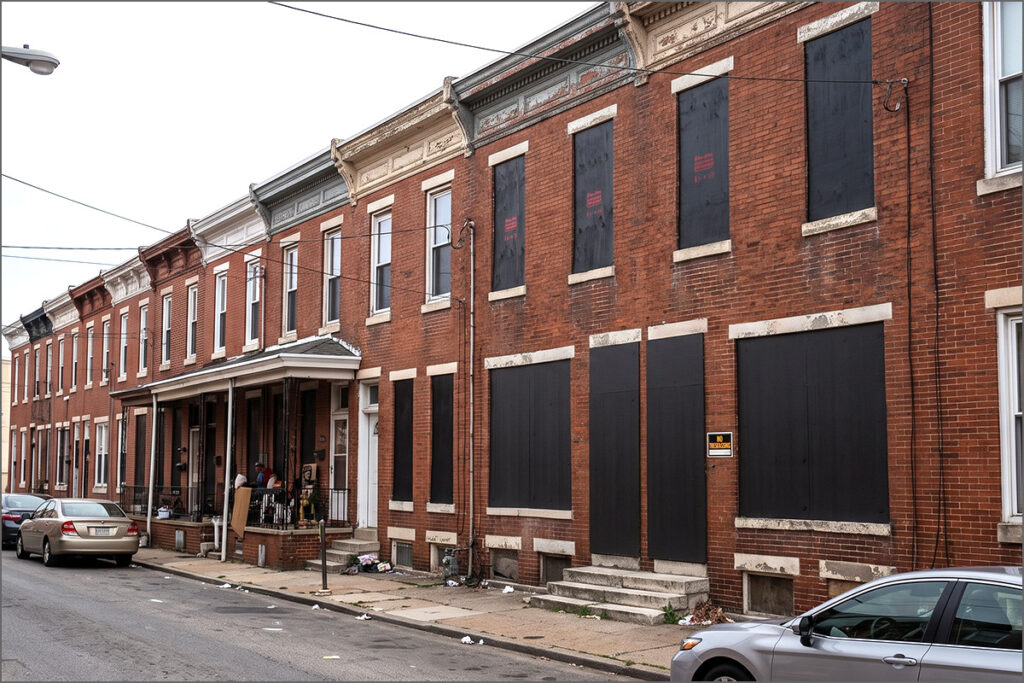
A new study by a University of Pennsylvania team of LDI Senior Fellows suggests that cleaning up badly deteriorated neighborhoods may help prevent some opioid overdose deaths — particularly when abandoned houses are secured so people can no longer easily enter them to use drugs.
Led by Eugenia C. South, MD, MS, and Zachary Meisel, MD, MS the research team analyzed 1,667 city blocks in a Philadelphia neighborhood with a particularly high rate of opioid overdoses. From 2019 through 2021 in this neighborhood, the city carried out more than 2,100 neighborhood improvements, including cleaning vacant lots, organizing community trash pickups, and sealing abandoned houses. Researchers compared overdose rates on blocks receiving these interventions with blocks that did not.
A unique element of the work was the use of Philadelphia Fire Department EMS data based on EMS responses to overdose calls.
Taken together, the neighborhood improvements were associated with a reduction in fatal opioid overdoses, equivalent to an estimated 35 fewer overdose deaths during the study period. They did not, however, produce a measurable reduction in nonfatal overdoses.
The findings were reported in “Neighborhood Environmental Interventions and Opioid Overdose Rates,” published in JAMA Network Open.
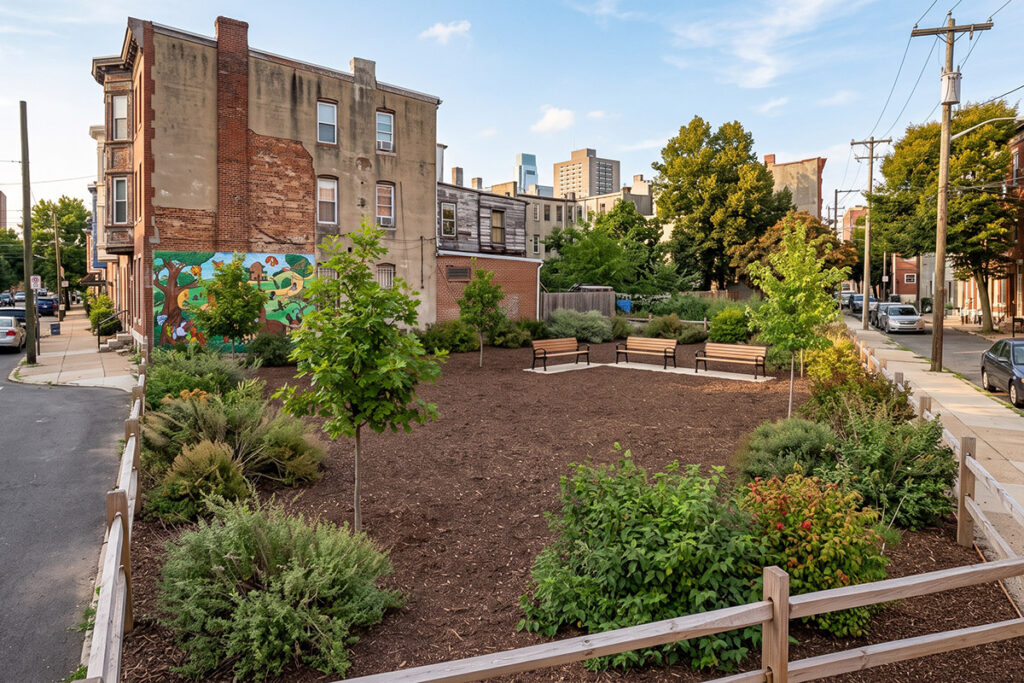
For the last 15 years, South has studied how deteriorated neighborhood conditions affect residents’ physical and mental health and safety. Her nationally recognized research on neighborhood greening has shown that relatively simple interventions — such as cleaning and greening vacant lots, planting trees, and remediating abandoned properties — can reduce violence and stress and improve residents’ mental health and well-being. This latest work was the first attempting to measure the impact of these interventions on the number of fatal opioid overdoses occurring in a neighborhood.
Its most striking finding involved abandoned houses. Securing these buildings — primarily by securely sealing their doors and windows to prevent people from entering — was associated with a 17.6% reduction in fatal overdoses and an 11.5% reduction in nonfatal overdoses. Trash pickups, by contrast, were not associated with a significant change in overdoses. One-time vacant-lot cleanups were unexpectedly associated with an 11.7% increase in nonfatal overdoses, although not with an increase in deaths.
The researchers offer a possible explanation for the abandoned house finding: sealing vacant buildings may change where people use drugs rather than whether they use them. Abandoned buildings provide secluded places where someone can overdose alone and remain unnoticed. If those buildings are inaccessible, people may use drugs in places where other people are present and can administer naloxone or call for emergency help. The researchers emphasize that this is a possible mechanism, not something the study proved.
The finding of an increase in overdoses in previously cleaned up vacant lots seemed puzzling. The researchers note that these lots received only a one-time cleanup without continuing maintenance, so they could quickly deteriorate again. They also raise the possibility that cleaning a lot could inadvertently create a more usable space for drug use. Again, these are hypotheses rather than demonstrated explanations.
An important limitation is that this was not a randomized experiment. The researchers used a quasi-experimental statistical approach to compare changes on treated and untreated blocks, so the study can show an association between the interventions and overdoses but cannot definitively prove that securing abandoned houses caused the reductions. The research was also conducted in a single Philadelphia neighborhood, limiting how generalizable the results may be.
But the study suggests something potentially important about the opioid epidemic: the physical environment in which people use drugs may affect whether an overdose becomes fatal. It concluded that making abandoned buildings inaccessible could therefore be another public-health tool — not a replacement for addiction treatment, naloxone, or other harm-reduction measures, but something used alongside them.
~ ~ ~
The other LDI Senior Fellows on the research team were Shoshana Aronowitz, PhD, MSN, MSHP; Jeanmarie Perrone, MD; and David S. Mandell, ScD.
LDI Fellow and OB-GYN Calls for Faster Testing and Better Early-Pregnancy Care

Why a 2020 Federal Price Transparency Initiative has yet to Produce a Consumer Shopping Revolution

Cash Incentives Doubled Quit Rates Among High-Risk Patients, Penn LDI Study Finds

AI May Be a Scalable Way to Educate Transplant Patients, but its Clinical Impact Remains Unclear

New Study Focuses on Boarding Transition Time to Inpatient Medical Care

A Sweetened-Drink Tax May Raise Revenue Statewide While Improving Health