
Study Links Growing Wealth Inequality to Higher Death Rates
Five Decades of Data Reveal Particularly Strong Association Among Working-Age Women and Deaths Involving Suicide and Drugs
Health Care Payment and Financing
News | Video

One of the more surprising facts that emerged from a Sept. 17 virtual seminar co-hosted by LDI and the Tradeoffs podcast is that, despite how often the topic is discussed and debated in government and regulatory circles, no one actually knows the total amount of money being lost to fraud in Medicaid.
Titled “Decoding the Moment: States Weigh in on Medicaid Fraud,” the University of Pennsylvania event featured Medicaid executives from New York, Nebraska, and Massachusetts; Penn Medicaid researcher and LDI Senior Fellow Paula Chatterjee, MD, MPH; and Dan Gorenstein, Founding Executive Director of Tradeoffs, who served as moderator.

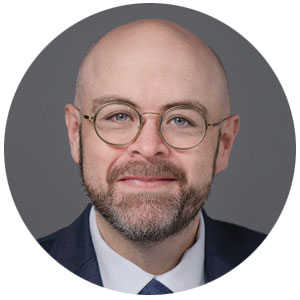
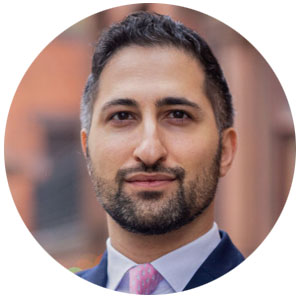
The Medicaid officials were Amir Bassiri, MSW, Medical Director of the New York State Department of Health; Drew Gonshorowski, MS, Former Medical Director of the Division of Medicaid in the Nebraska Department of Health and Human Services; and Kevin Lownds, JD, Division Chief of the Medicaid Fraud Division in the Massachusetts Attorney General’s Office.
Combined federal and state spending on Medicaid totals $949 billion annually. It accounted for 9.5% of all federal spending in 2025 and, on average, about 31% of state government spending that same year.
Opening the discussion, Chatterjee pointed out that estimating the total amount of fraud occurring within that flow of funding is difficult because “we only know about the fraud that is discovered.” But she pointed to “three big numbers” that provided a framework for the conversation:
• $2 billion: The amount recovered by state Medicaid Fraud Control Units in 2025. This involves fraud by providers such as home health agencies engaged in activities such as billing for services that were never provided.
• $37 billion: The amount, representing 6% of federal Medicaid spending, that involved improper payments in 2025. This number is frequently cited by lawmakers as “fraud,” but Chatterjee said that characterization is inaccurate. The Centers for Medicare and Medicaid Services (CMS) classifies these as “improper payments,” which can result from paperwork and administrative errors and deficiencies rather than theft or billing for services that were never provided. She also noted that 6% is also the improper payment rate in Medicare.
• $2.5 billion: The amount in federal Medicaid funds deferred this year by CMS in California and Minnesota. Health and Human Services Secretary Robert F. Kennedy Jr. has framed this as a proactive effort by a new federal anti-fraud task force and said the actions are a pause rather than a permanent budget cut. The governors of both California and Minnesota have charged that the actions are retaliatory and politically motivated.

Although public discussions of Medicaid fraud sometimes focus on people improperly obtaining benefits, the panel said beneficiary fraud is rare and concentrated its attention instead on fraud, improper billing, and regulatory violations by providers and health care organizations.
In fact, beneficiaries were generally portrayed as potential victims of Medicaid fraud rather than perpetrators. Massachusetts fraud chief Lownds described a case discovered because a patient could not obtain physical therapy: A fraudulent provider was already billing Medicaid for physical therapy supposedly being delivered to that patient, causing legitimate claims to be rejected and the patient to go untreated.
Another example involved straightforward criminal theft: Massachusetts prosecuted the owner of a home health agency who stole patients’ Medicaid identification numbers and billed more than $3 million for services that were never provided.
In other cases, patients actually received treatment, but providers knowingly violated Medicaid regulations. One behavioral health case involving improper supervision of unlicensed clinicians resulted in a $29 million civil recovery.
But much of Medicaid’s everyday anti-fraud work is far less dramatic. State officials continuously analyze billing data, looking for unusual patterns such as sudden increases in spending, providers billing far more than their peers, or rising numbers of services without corresponding increases in the number of patients receiving care. Those anomalies can trigger closer scrutiny.
Another major point was that poorly designed payment policies can themselves encourage costly provider behavior, though such activity falls short of fraud. Nebraska, for example, had been paying the same per-child rate for certain one-on-one and group autism services. That created an incentive to put children into groups because providers could collect the same rate for each child while using fewer staff. When the state changed the payment structure, provider behavior changed. The lesson, former Nebraska Medicaid official Gonshorowski said, is that preventing waste begins with designing sensible rules.
The panel offered a mixed assessment of the Trump administration’s stepped-up Medicaid anti-fraud campaign. Panelists described increased federal attention that has produced some genuine benefits, particularly better coordination among Medicaid agencies, inspectors general, prosecutors, and federal law enforcement. New York Medicaid Director Bassiri described a new “war room” approach that brings officials together rather than leaving them to operate in separate bureaucratic silos.
The panel also pointed out that fraud can consume money needed for legitimate services and that fraudulent providers can directly harm patients.
Moderator Gorenstein asked how officials can aggressively attack fraud without hurting the people Medicaid is supposed to serve.
State officials said that when a fraudulent or problematic provider must be removed, Medicaid programs try to transfer patients to legitimate providers without interrupting treatment. But doing that can be extraordinarily difficult, particularly in rural areas or places with too few providers. Bassiri said New York considers the loss of an essential service by even one eligible beneficiary a failure and described policies intended to preserve existing service authorizations during transitions.
The seminar ultimately presented Medicaid fraud as a program-management problem as much as a criminal justice problem. Catching criminals matters, but effective fraud prevention also requires good payment policies, sensible incentives, sophisticated analysis of billing data, cooperation among agencies and private Medicaid managed care plans, and enough enforcement resources to distinguish legitimate providers from bad actors.
The panelists repeatedly returned to the importance of precision. Broad anti-fraud measures can create their own damage if legitimate providers are overwhelmed, payments are indiscriminately stopped, or patients lose access to care. Conversely, weak oversight can allow fraud, waste, poor-quality treatment, and bad incentives to flourish.
The goal, as the panel framed it, is not simply to recover money but to protect Medicaid’s limited resources while making sure its beneficiaries receive appropriate, legitimate, high-quality care. Lownds emphasized targeted enforcement, Gonshorowski argued that program integrity begins with thoughtful policy, and Bassiri summed up the policy lesson particularly succinctly: “Incentives matter.”

Five Decades of Data Reveal Particularly Strong Association Among Working-Age Women and Deaths Involving Suicide and Drugs

Doctors Must Explain How Switching From Cigarettes May Lower Health Risks

LDI Fellows’ Study Backs Hospital Addiction Care Model, Although Financial Gains Remain Unproven

Chart of the Day: U.S. Misses Heat Deaths That Occur Outside Work, LDI Fellows Say

New Study Finds Many Local Markets Could Support More Competing Hospitals

Two Health Policy Experts Find Bipartisan Consensus in Site Neutral Payments, Controlling Medicare Costs