
Heart Failure Patients May Get Sicker When the Rent Is Too High
Cheaper Housing Could be a Way to Lower Hospitalizations Among Medicaid Patients with Heart Failure
News
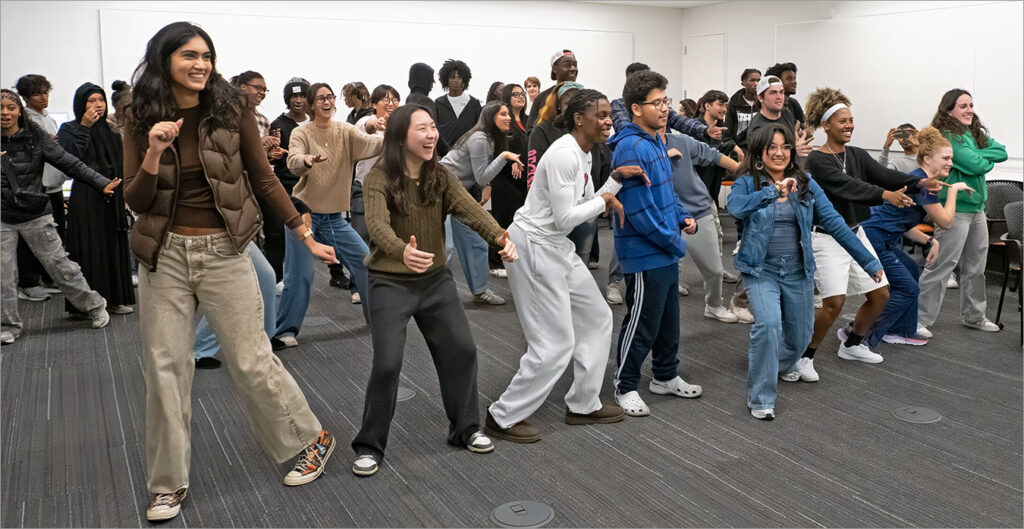
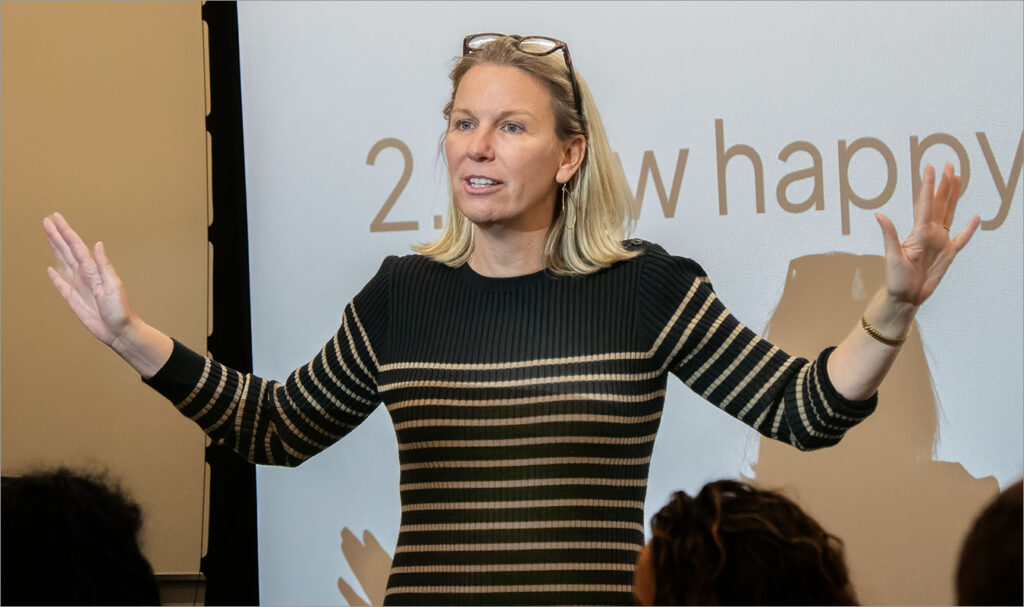
How do dance contests and paper airplane races relate to effectively teaching a health care leadership course at the University of Pennsylvania’s Wharton School? That question quickly comes to mind upon entering the classroom of Marissa King, PhD, as she presides over what can feel like an academic mosh pit: nearly five dozen students in constant motion—dancing, flailing, and shouting encouragement at their chosen teams—while the Village People’s “Y.M.C.A.” thunders through the room, loud enough to shake the tables.
“My goal is impact,” explained King, an LDI Senior Fellow and Wharton School Professor of Health Care Management. “As students enter medical school, nursing school, and other health care career paths, they often get bogged down in the technical side of medicine. I want them to remember—and live—the importance of social connection.”
“There is a science to creating connection, and that is what we do in this course,” she continued. “Whether it is through shared activities and synchronization in dance or by creating psychological safety through trust-building, we took the best of network science and brought it to life. For a class to be memorable, it has to have emotional resonance, which can come from joy, shared struggle, or deep connection.”
King was wrapping up the inaugural semester of “Leading the Health Care Workforce,” a Wharton Academically Based Community Service (ABCS) course that brought together 32 University of Pennsylvania undergraduates and 30 West Philadelphia high school students from the University-Assisted Community Schools (UACS) network. The mix was intentional: a semester long exercise in shared learning, mentoring, and professional networking among students already interested in future careers in health care.
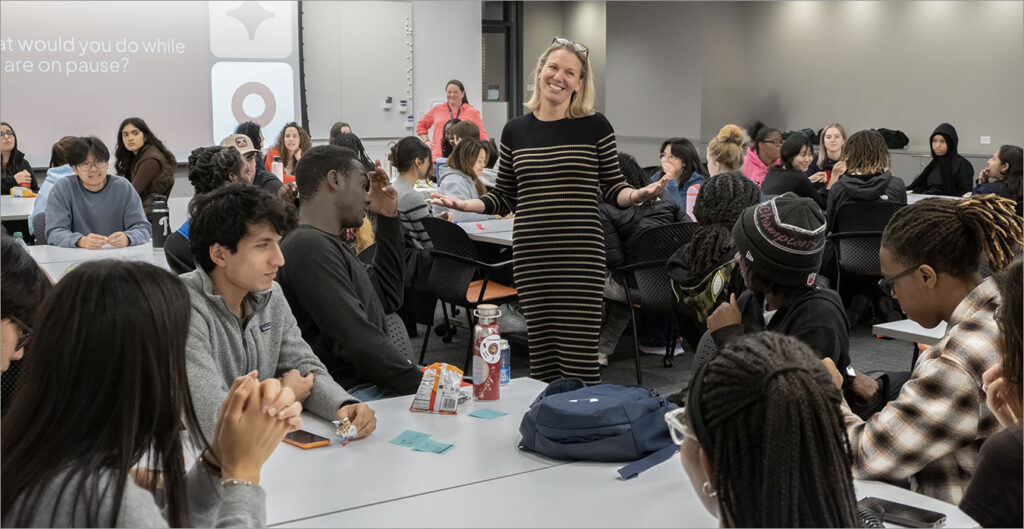
ABCS courses are credit-bearing university classes that integrate sustained community service directly into academic instruction and research. This course is a collaboration between the Wharton School and Penn’s Netter Center for Community Partnerships, the University’s primary hub for long-term civic engagement in West Philadelphia.
UACS, in turn, is a community school model in which the University partners with neighborhood public schools to function as comprehensive centers for education, enrichment, and family engagement. In West Philadelphia, that means Penn faculty, students, and staff working alongside teachers and administrators to support students well beyond the classroom.
“Leading the Health Care Workforce” also sits within a wider cascade of linked programs. All of the UACS high school students enrolled in the course also participate in the Netter Center’s Cross Grade Sports program, where they serve as mentors to elementary school students from the same neighborhoods, using sports as a vehicle for teaching leadership skills.
Those pathways ultimately converge in the Educational Pipeline Program, a joint initiative of Penn’s Perelman School of Medicine and the Netter Center that prepares and channels students into Penn Medicine’s employment pipeline—turning early exposure and mentorship into concrete workforce opportunities.
In her syllabus description of the course, King wrote:
“This course is grounded in the belief that conceptual understanding of leadership and management becomes far more powerful when paired with direct engagement in real-world experiences. Just as a physician would not be expected to practice medicine with only textbook knowledge, health care leaders thrive when management theories are augmented with hands-on experience.”
In an interview with LDI, she expanded on that approach.
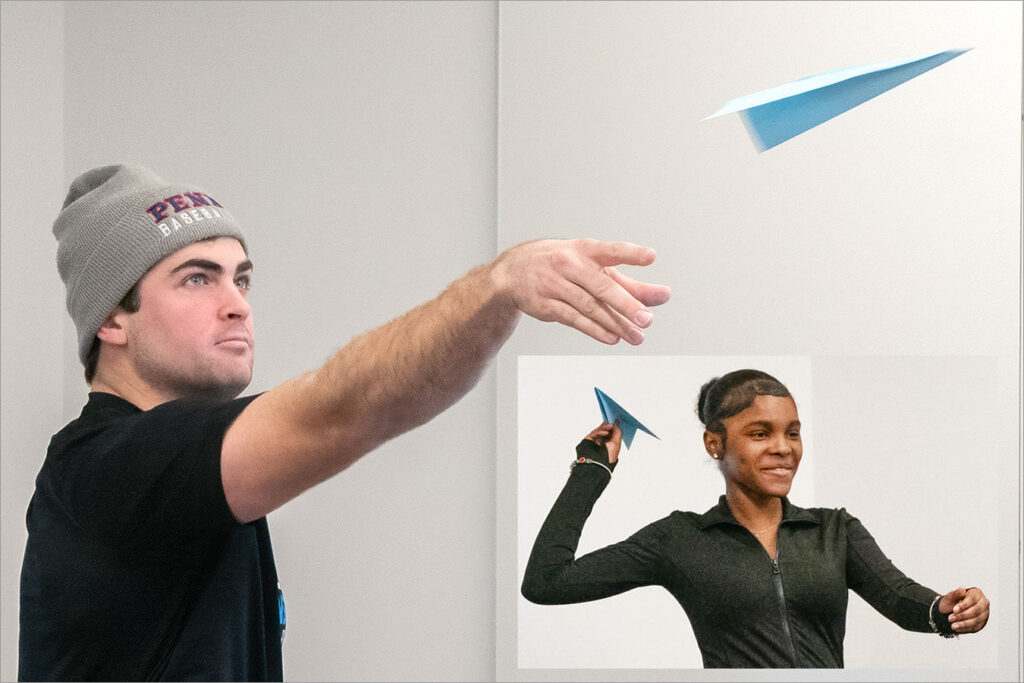
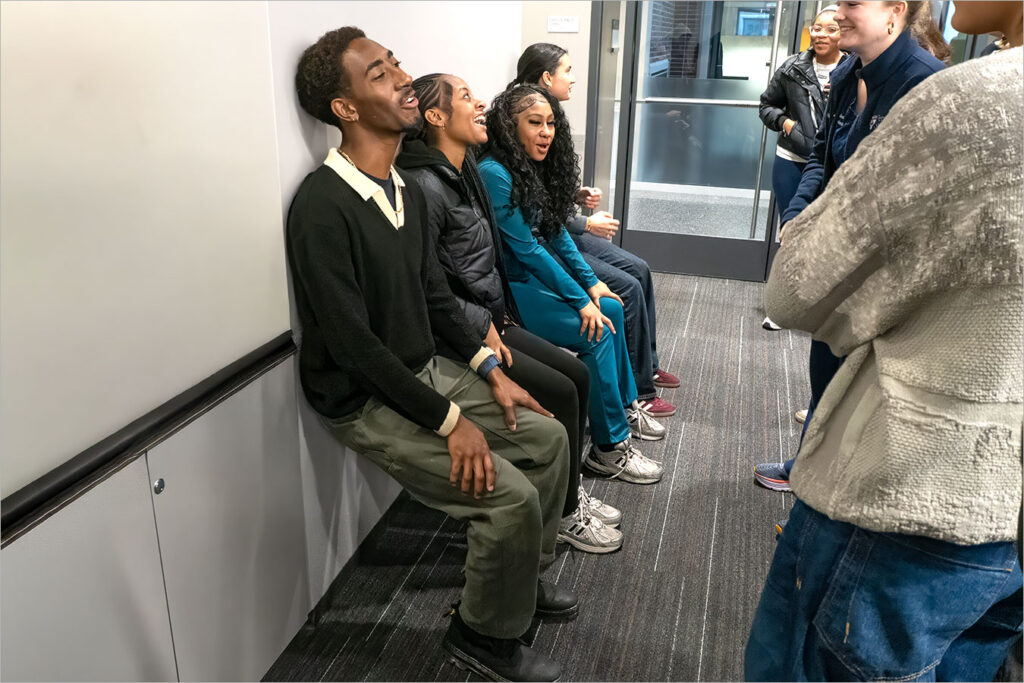
“I have always been a deep believer in experiential education,” King said. “I saw that much of what I was trying to achieve through simulations and field site visits was already being done more effectively through Academically Based Community Service courses that create sustained real-world engagement. The team at the Netter Center has figured out how to consistently make that happen, and as soon as I became aware of that work, I wanted to become part of it.”
The “Leading the Health Care Workforce” course was co-developed and co-taught with King’s counterpart at the Netter Center, Sara Kelly, Director of UACS Sports, Fitness & Health.
An expert in social networks, social influence, and the organizational dynamics of the health care delivery system, King is the author of the 2021 book Social Chemistry: Decoding the Elements of Human Connection, which was widely praised by major media outlets, including The New York Times, for its insights into human relationships and networking. Her current research focuses on increasing access to high-quality behavioral health care and improving the well-being of the health care workforce.
“Workforce shortages are strangling the health care system—driving up costs, contributing to burnout, and making it harder to deliver high-quality care,” King said. “There is an opportunity for Penn and University-Assisted Community Schools to build on longstanding partnerships and create something that is not only effective and mutually beneficial, but also a national model. One goal of the course was to help address urgent workforce shortages by equipping Penn students entering health care with effective, sustainable strategies, while simultaneously strengthening the local pipeline of future health care professionals by working with partner high school students.”
Beyond its experiential elements, the course follows a conventional academic structure, including writing assignments, leadership exercises, and field trips. This year’s excursions included visits to the Franklin Institute, the Mütter Museum, three West Philadelphia high schools, and a community health clinic.
Learning also extended beyond the classroom through a Career Exposure Event designed, organized, and staffed by the undergraduate students. Held in the Bodek Lounge of Penn’s Houston Hall, the event featured interactive stations where high school students explored a range of health care careers, including dental hygienist, pharmacy technician, emergency medical technician, EKG technician, and personal trainer.
Kelly added that the Wharton course is one component of a broader workforce development effort led by the Netter Center in partnership with Penn Medicine and other Penn entities.
“In past years, we’ve worked with Penn Medicine to connect students to full-time positions by preparing them through interview and résumé workshops,” she said. “Between 2022 and 2024, 16 high school graduates were hired.”
The Netter Center has also partnered with Pennsylvania Hospital to place students in its Pathways Associate Program over the past two years. Although the program offers a limited number of slots, two Netter-supported students were accepted in 2024, followed by five in 2025. In addition, the center collaborated with the Perelman School of Medicine’s Distribution Services Department to create an internship program; three of the four students who previously completed the internship now work full time in the department.
Asked to evaluate the inaugural semester and whether the course would become permanent, King said, “We achieved more this semester than I thought was possible. We hope to develop more robust collaborations with Penn Medicine in the future so we can continue to evolve the course and make it even more impactful than it already is.”

Cheaper Housing Could be a Way to Lower Hospitalizations Among Medicaid Patients with Heart Failure

An LDI Expert Connects Nurse Wellbeing and Staffing to Patient Safety Outcomes

Preparing for Challenges Ahead

Issue Brief: Understanding Gaps and Opportunities to Advance Research and Policy

A 2024 Study Showing How Even Small Copays Reduce PrEP Use Fueled Media, Legal, and Advocacy Efforts As Courts Weighed a Case Threatening No-Cost Preventive Care for Millions
