
Over 500 U.S. Hospitals Have Stopped Delivering Babies Since 2010
A Crisis in Maternal Care is Unfolding—and it’s Hitting Rural and Urban Communities Alike
News
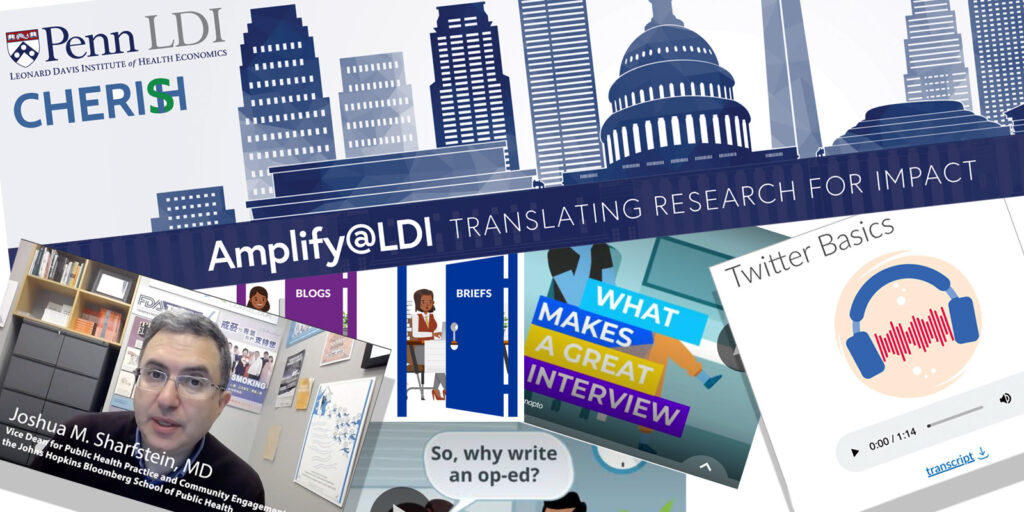
The University of Pennsylvania’s Leonard Davis Institute of Health Economics (LDI), which since 2019 has been offering the Amplify@LDI in-person communications course to help academic researchers translate and disseminate their findings more widely, has developed and just launched a free, online course providing an introduction to the same topics.
The new training resource is a collaborative effort of LDI and the Center for Health Economics of Treatment Interventions for Substance Use Disorder, HCV, and HIV (CHERISH). Called Amplify@LDI: Translating Research for Impact, the interactive course modules focus on the key tools and skills researchers need to bring more attention to their work and its policy implications. Included is training in key tools and skills in translation and dissemination across the media and policy audiences most relevant to health services research. The free course requires registration but is open to all.
“The program is trying to meet the need for researchers to do more to translate and disseminate their work for greater real-world impact,” explained David Grande, MD, MPA, LDI Director of Policy. “This program is a starting point for researchers to up their game and reach policymakers and other key decision-makers in more effective ways.”
Grande, an Associate Professor of Medicine at the Perelman School is one of the three course directors along with Zachary F. Meisel, MD, MPH, a Professor of Emergency Medicine and Director of the Center for Emergency Care Policy and Research at Perelman; and Nadiyah Browning, MPH, LDI’s Senior Project Coordinator for Strategic Partnerships and Policy. Grande, Meisel, and Browning are also members of the Dissemination & Policy Core of CHERISH.
The course consists of five modules designed to increase proficiency in the planning and drafting op-eds for mainstream media, optimizing social media presence, pitching, and presenting research findings in blogs and briefs, effectively interacting with journalists to promote research findings, and engaging with policymakers and other key audiences in the most effective ways to influence the policy process.
The tightly focused, self-paced online curriculum takes participants through a short series of text explanations, animated whiteboard videos, expert moderated videos, and audio excerpts, featuring top authorities in the field. For instance, the Policy Engagement module is led by Joshua M. Sharfstein, MD, Vice Dean for Public Health Practice and Community Engagement at the Johns Hopkins Bloomberg School of Public Health. The module’s material is accompanied by a series of brief Sharfstein videos explaining the key points. Sharfstein is a member of the CHERISH Policy Advisory Board.
A Crisis in Maternal Care is Unfolding—and it’s Hitting Rural and Urban Communities Alike

Stable Payments Improved Margins But Not Liquidity, New LDI Analysis Finds

LDI Senior Fellow Cited for “Significant Contributions” in Research

Outdated Laws Target Black and Queer Lives in Over 30 States, Fueling a Deadly Disease

Selected for Current and Future Research in the Science of Amputee Care
Research Memo: Delivered to House Speaker Mike Johnson and Majority Leader John Thune